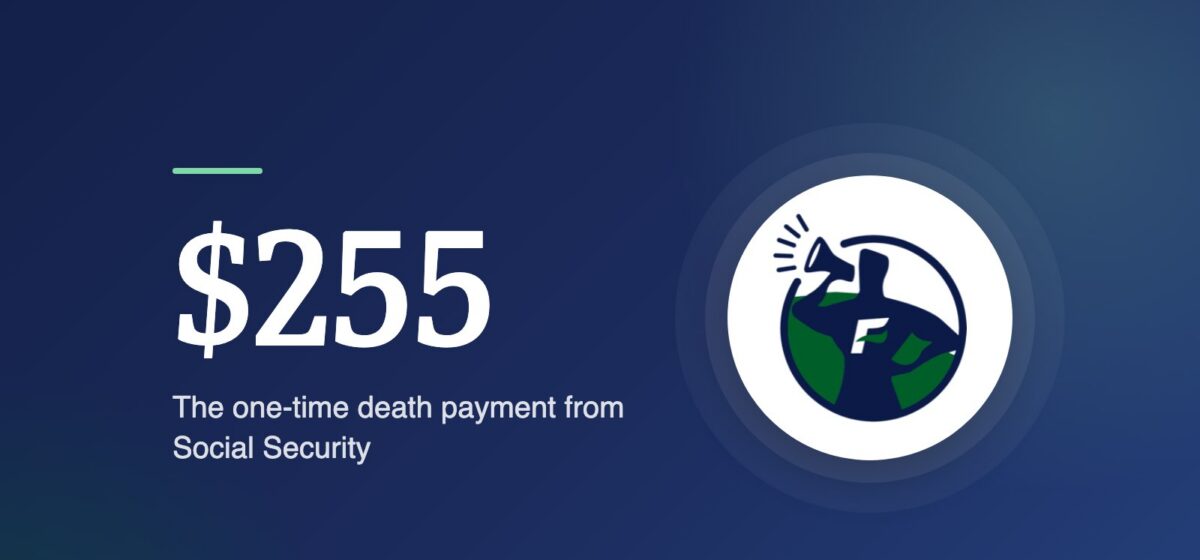
Social Security pays a one-time death payment of $255. It goes to an eligible surviving spouse or, when no spouse qualifies, to eligible children, and someone has to apply for it within two years of the death.
That is the whole benefit. It is not paid monthly, it does not rise with funeral prices, and many families who expect it find that nobody in the family is eligible.
Who can receive the $255
Social Security looks for a spouse first.
A surviving spouse who was living with the person who died can receive the payment. A spouse who was living apart can still receive it if that spouse was eligible for Social Security benefits on the deceased person's record.
If no spouse meets either test, the payment goes to the deceased person's eligible children. According to the Social Security Administration (SSA), that means a child who is:
- 17 or younger, or
- 18 or 19 and a full-time student in kindergarten through 12th grade
The list stops there. A grown daughter who put the funeral on her credit card is not on it. Neither is a brother, a sister, a friend, or the funeral home. When no spouse or child qualifies, no payment is made.
SSA decides each case from its own records, so treat this as a summary and let the agency confirm it.
The two-year deadline
You have to apply within two years of the date of death. After that, the payment is gone.
Two years sounds like plenty of time. In practice the weeks after a death fill up with the service, the bank, the landlord, and the mail, and a $255 form is easy to leave at the bottom of the pile. Make the call in the first month, while you are already handling the paperwork.
Do not assume the money will arrive on its own. Call and ask whether an application is needed.
How to apply
There is no online application for this payment. You apply one of two ways:
- Call Social Security at 1-800-772-1213
- Visit a local Social Security office
Have the Social Security number of the person who died in front of you, and ask the representative which documents they need from you. Write down the date you called and the name of the person you spoke with.
Use the same call to ask about monthly survivor benefits. Those are a separate program with separate rules, and for a widow, a widower, or a child still at home they can matter far more than the one-time payment.
How far $255 goes
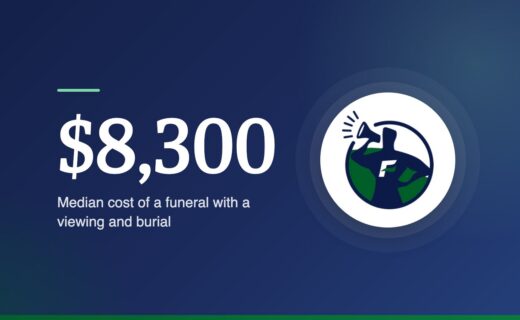
Not far. The National Funeral Directors Association (NFDA) reported in its 2023 General Price List Study that the median funeral with a viewing and burial cost about $8,300. A funeral with a viewing and cremation had a median of $6,280.
Against those figures, $255 is about 3 percent of a burial and about 4 percent of a cremation.
The NFDA medians also leave things out. They do not include the cemetery plot, the monument or marker, or cash-advance items such as flowers and the obituary notice. A family that needs a plot will be even further from covered.
Other help worth asking about
The death payment is one of several small sources. None of them is large, and each has its own rules.
Veterans may qualify for burial benefits from the Department of Veterans Affairs. Eligibility and amounts are listed at va.gov.
Some states and counties run burial assistance programs for families with very little money. They differ widely, and some places have none. The county social services office is the usual place to ask.
Medicare is health insurance and does not pay for a funeral. Medicaid does not pay funeral homes directly.
The Federal Trade Commission's Funeral Rule will not pay anything, but it helps you spend less. A funeral home has to give you prices over the phone and a General Price List to keep, and you can buy only the goods and services you want.
Planning for the gap
Somebody pays the difference between $255 and the real bill. If no money has been set aside, it is usually the spouse or the children, and usually within a few days.
Final expense insurance is one way to set that money aside ahead of time. It is a small whole life policy, and the benefit is paid to the person you name.
Two kinds are sold, and they work differently. A simplified issue policy asks health questions but requires no medical exam. If you are approved, most policies pay the full benefit from the first day. A guaranteed issue policy asks no health questions at all. In return it typically has a waiting period, often two years, during which a death from illness returns the premiums with interest instead of paying the full benefit. Your health, your age, and the insurance company decide which kind you can get.
Adult children can also start this conversation. In most cases a son or daughter can buy a policy on a parent if the parent agrees and takes part in the application.
Our quote page asks a few questions and shows you a price.
Sources
- Social Security Administration, Lump-Sum Death Payment, read November 2026.
- National Funeral Directors Association, 2023 General Price List Study. Median figures as published in summaries of the study.
- Federal Trade Commission, The FTC Funeral Rule, read November 2026.
See what a policy would cost you
Answer a few questions online and see your price.